Morning Routine for Anxiety
You've been sold a lie about morning routines.
The 5 AM club. The cold plunge. The HIIT workout before sunrise. The bulletproof coffee and the gratitude journal and the ice-cold shower that's supposed to "shock your system awake."
Here's an important component: if your nervous system is already running on fumes, that morning routine isn't optimizing you, it's breaking you.
I see this all the time with clients who come to me exhausted, wired, and confused. They're doing everything right according to the productivity gurus. They're up before dawn. They're moving their bodies. They're following the protocol.
And they feel worse.
Because here's the thing about cortisol, that stress hormone everyone loves to talk about but few people actually understand: it's supposed to rise gently in the morning. A soft, natural wake-up call from your adrenal glands that says, "Hey, it's time to start the day."
But when you jolt yourself awake with an alarm, immediately flood your system with cold water, and then spike your heart rate with intense exercise? You're not "optimizing your cortisol curve" or your serotonin rise either. You're teaching your body that mornings might be dangerous.
You're starting every single day in fight-or-flight.

What your nervous system actually needs
Your body doesn't need to be shocked into productivity. It needs to be gently invited into wakefulness.
Think about it: when you were a kid, what felt better, being yanked out of bed by a parent yelling that you're late, or slowly waking up to sunlight, cartoons, and the smell of breakfast?
Your nervous system remembers… and it's begging you to stop treating mornings like a boot camp.
The goal isn't to activate faster, it's to regulate better.
When you start your day in "rest and digest" mode, what we call ventral vagal activation in polyvagal theory, you're telling your body: We're safe. We have time. We can ease into this.
That's when your prefrontal cortex comes online. That's when you can actually think clearly, make good decisions, and handle stress without immediately wanting to snap at everyone around you.

Cold plunges and high-intensity cardio aren't bad. But if you're already anxious, already running on cortisol, already feeling like you're barely holding it together? Those productivity tasks are gasoline on your already raging fire.
You don't need more intensity. You need more safety.
And that starts the moment you open your eyes.
Let me tell you what's actually happening in your body when you cold plunge first thing in the morning, when you’re body is already running on 100:
Your sympathetic nervous system, the part responsible for survival, gets activated. Hard. Your heart rate spikes. Your blood vessels constrict. Adrenaline and cortisol flood your system. Your body literally thinks you're in danger.
And you are. Physiologically speaking, cold water immersion is a stressor. A controlled one, sure. But a stressor nonetheless.
For someone with a well-regulated nervous system, that's fine. They have the capacity. Their body can handle the spike and then return to baseline. They've built up the resilience through consistent practice and, here's the key, they're starting from a place of relative calm.
But if you're already anxious? If you're already running on fumes? If your baseline is "barely keeping it together"? That cold plunge isn't building resilience, it's compounding dysregulation.
Same thing with high-intensity cardio. Sprints, HIIT workouts, anything that jacks your heart rate up, it all triggers the same sympathetic response. You're telling your body to run from a predator. Every. Single. Morning.
The cortisol curve you're actually creating
Here's what I see in clients who are doing the "optimal morning routine":
They wake up already slightly activated (because they set an alarm that jolts them awake). Then they shock their system with cold water. Then they spike their heart rate with intense exercise. By 7 AM, their cortisol is through the roof, not in the gentle, natural way it's supposed to rise, but in the "I'm being chased by a bear" way.
And then they wonder why they're irritable by 9 AM. Why they can't focus. Why they're craving sugar by 10. Why they feel completely fried by 2 PM.
Your body isn't weak. Your morning routine is working against your biology.
You can't stress your way into regulation. You can't shock your way into calm.
When you're already in a state of chronic stress, which, let's be honest, most high-achievers are, adding more acute stressors doesn't build capacity. It depletes it.
Your nervous system doesn't get stronger. It gets more sensitized. More reactive. More easily triggered.
This is why gentle matters. Not because it's "soft" or "easy," but because it's actually effective.
So what does "gentle" actually look like?
It's not about candles and bubble baths (though if that's your thing, go for it!). It's about giving your nervous system the signal that you're safe, that there's no emergency, and that you can ease into the day instead of fighting your way through it.
Here's what that might look like in practice:
Wake without the jolt
In our society, ditching the alarm is probably not an option, but you can use the sunrise to help set your hormonal clock to gradually increase volume with a softer tone. Once you’re up and you’ve gotten ready for your day and maybe you have to get to your destination, incorporate that morning sunlight. Crack the window, step out on your porch or front door, get it however you are able to.
Even better? If your schedule allows it, let your body wake naturally a few days a week. Your system will thank you.
Stay horizontal for a moment
Before you sit up, before you check your phone, before you do anything, just breathe. Feel your body on your bed, give your toes a wiggle, maybe make sure blood flow is going back to any places that got cut off in your sleeping position.
You can make it trendy and place one hand on your chest, one on your belly. Feel your breath move. Notice the weight of your body on the mattress. This is orienting your nervous system to safety.
You're telling your body: We're not in danger. We have time. We can be here.
Move slowly, with intention
Instead of launching into burpees, try gentle stretching. Cat-cow. A slower walk. Shaking out your arms and legs. These movements help discharge any residual tension from sleep without spiking cortisol. They wake up your body without activating your survival response.

Gentle movement says: "I'm coming online." Intense movement says: "Run for your life."
Your nervous system knows the difference, even in the slightest.
Hydrate before you caffeinate
I know, I know. Coffee is sacred. But if you slam caffeine on an empty stomach first thing in the morning, you're adding fuel to an already-activated system. Drink a full glass of water first. Let your body rehydrate. Give your digestive system a chance to wake up before you introduce a stimulant.
If you absolutely need the stimulant, start with the water and then maybe try a hot tea, and then do get that coffee.
None of this has to be complicated or filled with a bunch of gadgets.
It just requires you to stop treating your body like a machine that needs to be shocked into productivity and start treating it like the intelligent, adaptive organism it actually is.
Here's the thing about cortisol: it's not the enemy. It's supposed to rise in the morning. That's how your body wakes you up, sharpens your focus, and gets you moving. The problem isn't cortisol itself, it's when your system is already running hot before your feet even hit the floor.
If you wake up with your heart racing, your jaw clenched, or your mind already spinning through your to-do list, your nervous system never got the memo that the previous day ever ended.
You're waking up in fight-or-flight. And when you stack a high-intensity workout, three shots of espresso, and a cold plunge on top of that? You're not "optimizing", you're compounding.
What happens when cortisol stays elevated
Your body can't tell the difference between a predator chasing you and a packed inbox. When cortisol stays high for too long, it stops being helpful and starts becoming destructive.
You might notice:
Difficulty falling or staying asleep
Constant low-level anxiety or irritability
Brain fog or trouble focusing
Digestive issues, bloating, or nausea
Cravings for sugar or salt
Feeling wired and tired at the same time
This isn't laziness, this isn't a character flaw, this is your system stuck in overdrive.
No, the solution isn't to push harder, it's to give your body permission to downshift.
The cortisol curve you actually want
In a regulated nervous system, cortisol rises gently in the morning, peaks around mid-morning, and tapers off through the afternoon and evening. This allows you to feel alert during the day and naturally tired at night.
But when your morning routine is designed to spike cortisol, intense exercise, no food, stimulants, cold exposure, you're forcing a sharp peak that your body has to recover from. And if you're already anxious? You're starting from an elevated baseline.
The goal isn't to eliminate or control cortisol. The goal is to let it rise naturally as it does, without adding unnecessary stress to a system that's already doing its best to keep you safe.
That's what gentle waking practices do, they work with your body's rhythm instead of against it.
Your nervous system doesn't need to be shocked awake, it needs to be invited.
When you start your day in "rest and digest", the parasympathetic state where your body feels safe, grounded, and open, you're giving your system the message that it doesn't have to brace for impact. You're telling it: We're okay. We can ease into this.
We are wanting to build a foundation of regulation that actually supports sustainable energy throughout the day, not just slowing things down.
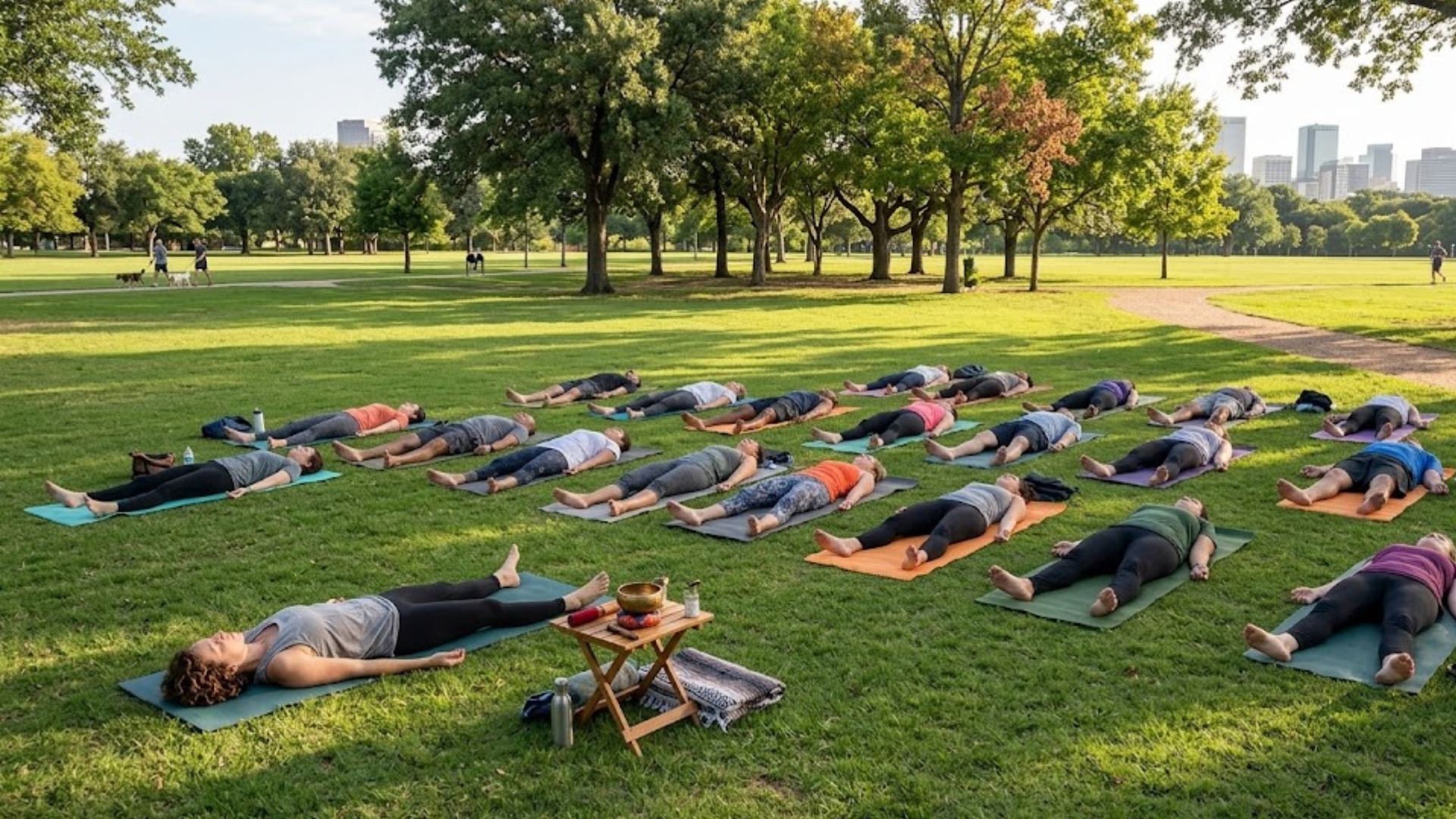
What "rest and digest" mornings look like
A gentle morning routine doesn't have to be elaborate, it just has to prioritize your nervous system before your to-do list. Here's what that can look like:
Start with sensation, not stimulation. Before you reach for your phone, notice your breath. Feel the weight of your body on the bed. Let your system register that you're here, you're safe, and there's no emergency.
Move slowly and with intention. Stretch. Roll your shoulders. Let your body wake up at its own pace instead of jolting it into action.
Eat something grounding within the first hour. Protein, fat, and fiber tell your body it's not in survival mode. Skipping breakfast to "optimize" often signals scarcity, which keeps cortisol elevated.
Expose yourself to natural light. Step outside, even for two minutes. Sunlight helps regulate your circadian rhythm and signals to your brain that it's daytime, without the jolt of artificial stimulation.
Delay caffeine if you can. Let your cortisol rise naturally first. If you need coffee, have it after food and after you've given your body a chance to wake up on its own terms. (Fasting is an exception to this… but we’ll get into that later)
These aren't "nice-to-haves", they're nervous system necessities.
When you start your day this way, you're not just managing anxiety, you're retraining your system to feel safe in the morning. And that safety carries forward into every decision, every interaction, every moment of your day.
You're not behind because you didn't wake up at 5 AM. You're right on time (winky face).
Your nervous system deserves a morning routine that actually works. If you're ready to build regulation into your day, not just productivity, I'd love to support you.
Book a session or grab my free 5-Minute Nervous System Reset Checklist to get started.
